

Every so often I talk to someone who thought they knew how to write a business book, right up until the moment they sit down to write one. A writer I’m helping, a seasoned IT consultant with 30 years of experience, wrote a draft manuscript of 60,000 words that contained many good points, but lots of insider lingo and no vulnerability in the style. Confident but not inclusive. The draft was a wreck.
The fear that shadows most first-time business authors is a persistent one: “What if I write the whole thing and it doesn’t actually make sense?”
That fear is not misplaced. It’s a warning that the structural work hasn’t been done yet. The good news is that writing a compelling nonfiction business book is a process with clear stages, not a talent you either have or don’t. This guide walks you through every major step of how to write a business book step-by-step, from sharpening your premise to prepping your launch assets, so you finish with a real action plan.
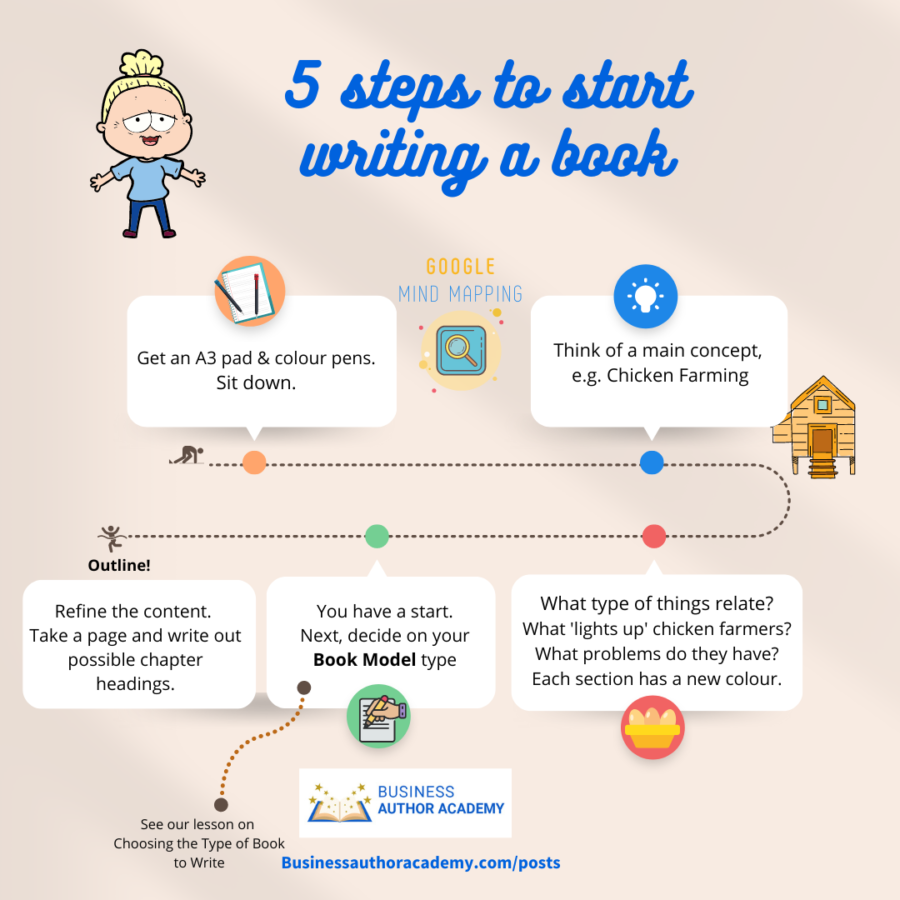
Nail your premise and ideal reader before you write a single word
This is the step frequently skipped early on, and it’s the one that unravels everything else downstream. Many business authors start with a topic instead of a premise. A topic is “leadership”. A premise is “Leaders who run small service businesses lose their best people not because of pay, but because of three unspoken expectations they never address.” One is a category; the other is a promise to a specific person with a specific problem.
Test your premise by asking two questions: Does it promise a specific result? Does it speak to a specific reader? If you can’t answer yes to both, keep sharpening.
From there, build a short reader profile: What is their role? What pain point are they sitting with right now? What have they already tried? What outcome do they need by the end of the book? Vague audiences produce vague books, every time. When you write to one person, the whole manuscript gets sharper.
How to build your book’s core promise in one sentence
Write this sentence: “This book helps [specific reader] achieve [specific outcome] by [your unique method or framework].”
Keep rewriting it until every word is doing real work. If the sentence could describe any book on your shelf, it’s not specific enough yet.
How to Write a Business Book: Premise, Outline, and Schedule
Before a single chapter gets drafted, three foundations need to be in place: a premise, a chapter-by-chapter outline, and a realistic writing schedule. Authors who skip any of these rarely finish. Authors who complete all three almost always do. Understanding how to write a business book that actually works starts here.
Build your chapter map (outline) before chapter one
A functional table of contents for a nonfiction business book typically runs 8 to 12 chapters, with each chapter in the 2,000 to 4,000 word range. That structure lands your business book manuscript length between 45,000 and 60,000 words for a traditional publishing pitch. If you’re self-publishing and using the book primarily as a lead-generation asset, 35,000 to 45,000 words is a commonly cited target. Plus, tighter focus and shorter length can meaningfully improve readability and the likelihood that readers finish the book.
The outlining approach I recommend to every client is simple: number each chapter, write one sentence stating what the reader will know or be able to do after reading it, then order them so each chapter builds directly on the one before. This business book outline template method is your manuscript map, and getting it right before you draft saves months of painful restructuring later. Each chapter should answer one question or solve one problem. If a chapter is trying to do three things at once, it needs to become three chapters or one tighter argument.
Business Book: Chapter Mapping

If you can’t write a single clear sentence explaining what a chapter delivers, the chapter isn’t ready to write. Readers who feel a chapter is rambling are almost always picking up on the author’s own unresolved thinking about what that section was supposed to do. Use the one-sentence chapter test to audit every entry in your outline before you draft a single page.
Set a Writing Schedule you’ll Actually Keep
Most business authors are writing around a full workload, which means waiting for inspiration produces nothing. Some authors finish entire books in six months while others write on-off for two years. The difference is never talent. It’s always whether they made a calendar commitment instead of a vague intention.
A realistic milestone schedule for a full-time professional looks like this: months one and two, consider and lock in your premise, complete your outline, and draft your first two chapters to test your voice and structure. Months three through five, draft the bulk of the manuscript at a steady pace of 500 to 1,000 words per focused session, three to five times a week. Month six, complete your first full draft and do a self-edit pass for structure and repetition.
That gets you a workable manuscript in six months on roughly three to five hours of focused writing per week, a pace that aligns with widely cited guidance on sustainable creative output for working professionals. In my experience with clients, three to five focused hours per week is achievable without burning out, and consistency matters far more than volume.
What to do when you miss a week (and you will)
Don’t try to catch up. Simply return to your scheduled sessions and continue from where you left off. Compensating for lost time by doubling your word count targets is the fastest way to burn out and stall permanently. Six months of steady, moderate effort consistently outperforms any two-week sprint that ends in burnout and silence.
Revise your manuscript along with a professional editor
Every publishable business book manuscript needs three separate revision passes, done in the right order. First comes the structural edit: does your argument hold together from start to finish? Are chapters in the right sequence? Are there gaps in logic or sections that repeat each other?
Second is the line-level edit: does every paragraph deliver on its opening sentence? Third is the copy pass: is the grammar clean, the terminology consistent, and the voice steady throughout? Does it have AU or US punctuation and spelling?
Many first-time authors report jumping straight to copyediting and missing structural problems entirely, which is like repainting a house built on a cracked foundation. A developmental read reveals things: a chapter that contradicts an earlier one, an example that serves the author’s ego rather than the reader’s understanding, or a framework promised in chapter one that never gets delivered.
Working with a developmental editor who has reviewed dozens of nonfiction manuscripts gives you the structural feedback that protects the six to nine months you’ve already invested.
It’s easiest for Jennifer as editor to get a helicopter overview and see what’s wrong with various sections — and very difficult for the writer to see it.
Business Author Academy provides exactly that kind of developmental support for professionals who want to get it right.How to structure a business book for traditional or self-publishing
Understanding how to structure a business book begins with knowing which publishing path you’re on, because each one shapes your manuscript’s length, format, and proposal requirements differently.
Traditional publishing takes 12 to 24 months from signed deal to shelf. You’ll earn lower royalties, around 10%, give up significant creative control, and need a polished book proposal for your business book. In return, you get professional editorial support, meaningful bookstore distribution, and a credibility signal that still carries weight in certain industries.
The proposal itself needs a sharp overview, a defined target audience, competitive titles with analysis, a strong author bio and platform section, a marketing plan, a chapter outline, and polished sample chapters. Literary agents reject most proposals for two reasons above all others: unclear audience and an author platform too small to support sales.
For most coaches and consultants using their book as a lead-generation and credibility asset, self-publishing offers speed and control that aligns far better with business goals. You can move from finished manuscript to published book in weeks rather than years, earn a higher royalty share, and keep the book tightly connected to your services and brand. The trade-off is that you fund editing, design, and marketing yourself.
I talk about this strategy in “More Clients, Pre-Sold”, a 2026 book. Make the decision based on your actual business goal, not the prestige of Amazon bestseller. For many coaches and consultants focused on lead generation, a self-published book that consistently generates qualified leads can deliver more direct business value than a traditionally published title that receives only book-industry promotion. They don’t care because they aren’t in the field.
Start marketing before the manuscript is done
The authors who launch most successfully start building their audience and prelaunch assets months before the book exists. By the time your manuscript is in final edits, your landing page should be live, your email list should be growing, and your early readers should already have advance copies in hand. Industry estimates suggest that many self-published books sell fewer than 100 copies in their first year when there’s no audience or launch strategy behind them, a sobering reminder that business author marketing is not optional.
A strong prelaunch typically begins 90 to 180 days before your release date, with the final four to six weeks serving as the intensive push where momentum is concentrated. Post about your writing journey. Tease chapter themes (image and words). Collect endorsements and early reviews. Reach out to podcast hosts and newsletter writers in your niche.
On release day itself, you need a strong book description, Amazon A+ content, a 3D book image for social sharing, and launch content ready to go. Templates, checklists, and prelaunch support are useful tools that can help streamline execution, alongside your audience, platform, and promotion plan, they’re part of what separates a launch that fizzles from one that drives real sales and inbound inquiries. Don’t worry, Business Author Academy can help clients prepare these assets so the final weeks don’t become a scramble.
And packages cost around the same as those ‘production only’ vanity publishing packages.Your next step starts with the premise
Learning how to write a business book is a process with multiple stages, clear milestones, and deliverables at every step. It is not a creative mystery reserved for people with a natural gift for writing. Consultants, coaches, and service-based professionals can go from a messy first page to a finished manuscript that builds their business every day, and every single one of them started by getting the premise right.
If you’re serious about how to write a business book that earns attention, builds credibility, and works as a business asset long after launch, Business Author Academy exists for professionals who want to do this once and do it well.
Founded in Moreton Bay, Qld, Australia, the academy’s founder Jennifer Lancaster has edited books since 2013 and written books since 2006. You just won’t find that direct expertise at Balboa Press, Austin Macauley or Vivid Publishing.Whether you need one-on-one writing coaching to get unstuck, a developmental editor to strengthen your manuscript, or a full suite of marketing templates for launch, the support is there at every stage. Book a discovery call to identify exactly where you are in the process and what kind of help will move you forward fastest. Your expertise deserves a book that works as hard as you do.