This beautiful mockup of farmhouse photography and interiors was copyedited and designed by Jennifer. It contains historic stories about Frenchs Forest and was eventually published with Austin Macauley. Directions by author, Danni Murray, on which elements to put where made the project easier.

How I Design and Edit Coffee Table Books
A beautifully crafted coffee table book is more than a collection of photographs — it is a story told through imagery and the careful weight of words. Here is how I guide authors through every stage of the journey.
It Starts with the Author’s Story
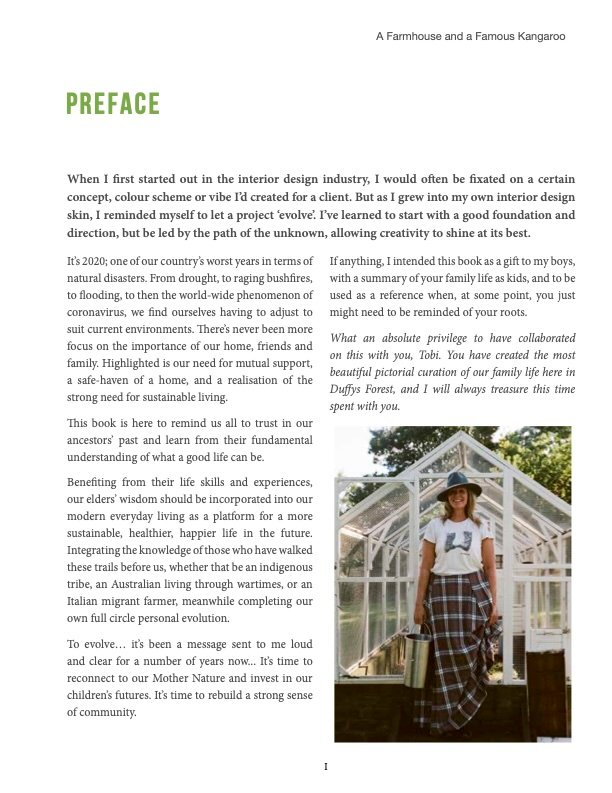
You will see an example of an author preface above.
Every coffee table book begins with a conversation. Before a single page is designed or a photograph is selected, I sit down with the author to explore the theme at the heart of their project. Whether it is a love letter to a historic neighbourhood, an interior styling portfolio, or a family legacy captured in photographs, the theme shapes every decision that follows — from the tone of the captions to the breathing room around each image.
This early collaboration is the most important step of all. A clear creative vision saves time, avoids costly revisions, and ensures the finished book genuinely reflects the author’s voice.
Copyediting: Getting the Words Right First
Once the theme is established, we turn our attention to the text. I work through the manuscript in Microsoft Word, copyediting for clarity, consistency, and style. For projects like Danni Murray’s book on the historic stories of Frenches Forest, this means handling a rich body of archival material with sensitivity — preserving the character of original voices while making the prose accessible and engaging for a contemporary reader.
Good copyediting at this stage also means fewer surprises later. Text that is proofread and finalised before layout begins means that the design process will go far more smoothly.
Sourcing the Photography
Images are everything in a coffee table book. I ask authors to share their photographs via a Google Drive folder, which keeps the collaboration organised and the files accessible throughout the project. High-resolution images, well-sorted and clearly labelled with the subject, are the foundation of a time-saving, lovely layout.
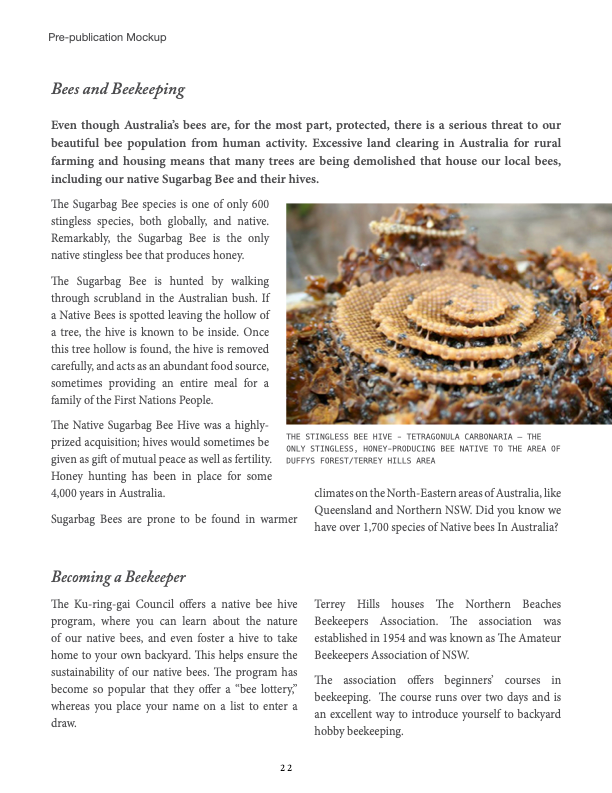
Designing the Layout in Adobe InDesign
With the text polished and the images in hand, I begin designing in Adobe InDesign — the industry-standard tool for professional book layout. This is where the book comes alive.
Generous margins and considered white space are hallmarks of my design approach. A wide margin does not waste space; it gives the reader’s eye somewhere to rest and allows the photographs to command attention. On 120 gsm gloss paper, this combination is particularly striking — the weight of the stock gives each page a satisfying presence, and the gloss finish makes colours pop off the page with real luminosity.
Once the initial mockup is complete, I share the designs with the author for review. Feedback is welcomed and revisions are worked through collaboratively until the layout feels exactly right. It is not a bother as I also want to get it right.
Handing Over the Files — and Opening the Door to Publishing
When the design is finalised, I share all the production-ready files with the author. This is a deliberate and important step. Owning your files means owning your options.
Authors can take their completed design package to a traditional publisher as a professional proposal — a fully realised mockup is a far more compelling pitch than a manuscript and description. Alternatively, authors who prefer to move straight to print have several solid self-publishing pathways available to them.
I’d love to help with a customised book publishing package based on “Self-Publish and Own it“.
Self-Publishing: From Blurb to Cloth-Bound Hardback
For authors choosing to self-publish, platforms like ‘Blurb’ offer an accessible and high-quality route to a finished hardcover or softcover book (in low print runs).
For those seeking a more premium result, working with a specialist print broker opens the door to truly beautiful production values — including cloth-bound hardback covers that convey real gravitas on a shelf or a coffee table.
Paired with 120 gsm gloss paper and a thoughtfully designed layout with wide margins, the result is a book that looks and feels like it belongs alongside the finest titles in any bookshop.
Ready to Create Your Book?
If you have a story to tell — a place, a passion, or a legacy worth preserving — I would love to help you bring it to life. From the first conversation about your theme through to a print-ready file, every stage of the Coffee Table book design process is designed to support you as an author and do full justice to your vision.
Get in touch to discuss your coffee table book project.